[COLUMN] Martin Scorsese's Cape Fear Remains One of the Great Remakes | by Darren Mooney
![[COLUMN] Martin Scorsese's Cape Fear Remains One of the Great Remakes | by Darren Mooney](https://bakemono.app/data/31/0d/310d80d25242f3da33b7a872c61e9ca74d8560a69ab57766fd85cdd748132b57.jpg?f=fear-1.jpg)
Note: This week saw the launch of the new streaming adaptation of Cape Fear on Apple TV. We’ll talk about that in a couple of weeks, as it’s a show that is difficult to discuss in the abstract without revealing major plot points. If you’re looking a review: it starts strong and has three great lead performances from Javier Bardem, Amy Adams and Patrick Wilson, but it’s also a tight two-hour concept spread over ten episodes and it takes some very meandering and wheel-spinning turns in the middle stretch of the season. But it felt like a good opportunity to revisit the last attempt to remake Cape Fear.
It is interesting to revisit Martin Scorsese’s remake of Cape Fear today, three-and-a-half decades after it was originally released.
At the time, the film seemed like an oddity. Scorsese was at the start of an incredible run heading into the 1990s. He had just made Goodfellas, one of the decade’s defining films. He was about to make Age of Innocence and Casino. After spending the 1980s in something akin to the creative wilderness, slowly rebuilding his commercial credibility perhaps in hopes of getting his passion (and Passion) project The Last Temptation of Christ off the ground, Scorsese was a major artist again.
So, Cape Fear seemed like a strange choice. It was not a film that Scorsese arrived at with any intention. The project had originally been developed by Steven Spielberg as a vehicle for Robert DeNiro, but Spielberg reportedly grew uncomfortable with it for being “too violent.” So Spielberg traded the remake with his old friend Scorsese for a project Scorsese had been developing, Schindler’s List, which Scorsese claims had been “scuttled“ by the reception to The Last Temptation of Christ, but which also perhaps needed a Jewish, rather than Catholic, director.
The reception to Cape Fear at the time was tepid. Praising the film, Roger Ebert noted “a certain impersonality in a film by this most personal of directors.” In The New York Times, Vincent Canby backhandedly opined, “One should not be too appalled by what Mr. Scorsese and his collaborators are up to here. Most remakes are of movies that have some claim to singularity. Not this one.” Kenneth Turan in The Los Angeles Times lamented, “Have our lives truly become so hollow that this kind of unapologetic bludgeoning of our sensibilities passes for jolly weekend entertainment?”
Like so many Scorsese films that were dismissed on initial release, it is interesting to look back on his version of Cape Fear. Like The Color of Money, it feels like, for all Hollywood wasn’t entirely comfortable with him, Scorsese had a sense of where the industry was going, in ways that perhaps even he did not fully understand. The Color of Money rewatch now, forty years after the fact, as a prototypical legacyquel. Cape Fear feels in some ways like a very modern conception of a remake.
After all, while not as scrupulously faithful as Gus Van Sant was with his remake of Psycho, Scorsese makes a point to consistently and aggressively quote from J. Lee Thompson’s 1962 version of Cape Fear. He employs Bernard Herrmann’s classic title music. He brings back original cast members Robert Mitchum, Gregory Peck and Martin Balsam for winking and self-aware roles that are clearly in conversation with their work on the original film.
To be clear, Scorsese’s take on Cape Fear works as a movie in its own right. Like so many Scorsese films, it is a study of fractured and fraught masculinity, with attorney Sam Bowden (Nick Nolte) so emasculated that even the family dog will not listen to him, but answers to his wife, Leigh (Jessica Lange). So much of the film is about Sam’s inability to protect and defend his family, and the aggressive and subversive violation of that family unit by Max Cady (Robert DeNiro).
Scorsese also infuses the film with a decidedly biblical subtext. Whereas the original film is the story of an innocent family being tormented, Sam is being punished for betraying Max as his client, for burying a report that could have got Max acquitted of a crime he definitely committed. Max is a product of the old-school religion of the American South. He quotes scripture and boasts that “grandaddy used to handle snakes in church.” He condemns Sam to “the ninth circle of Hell.”
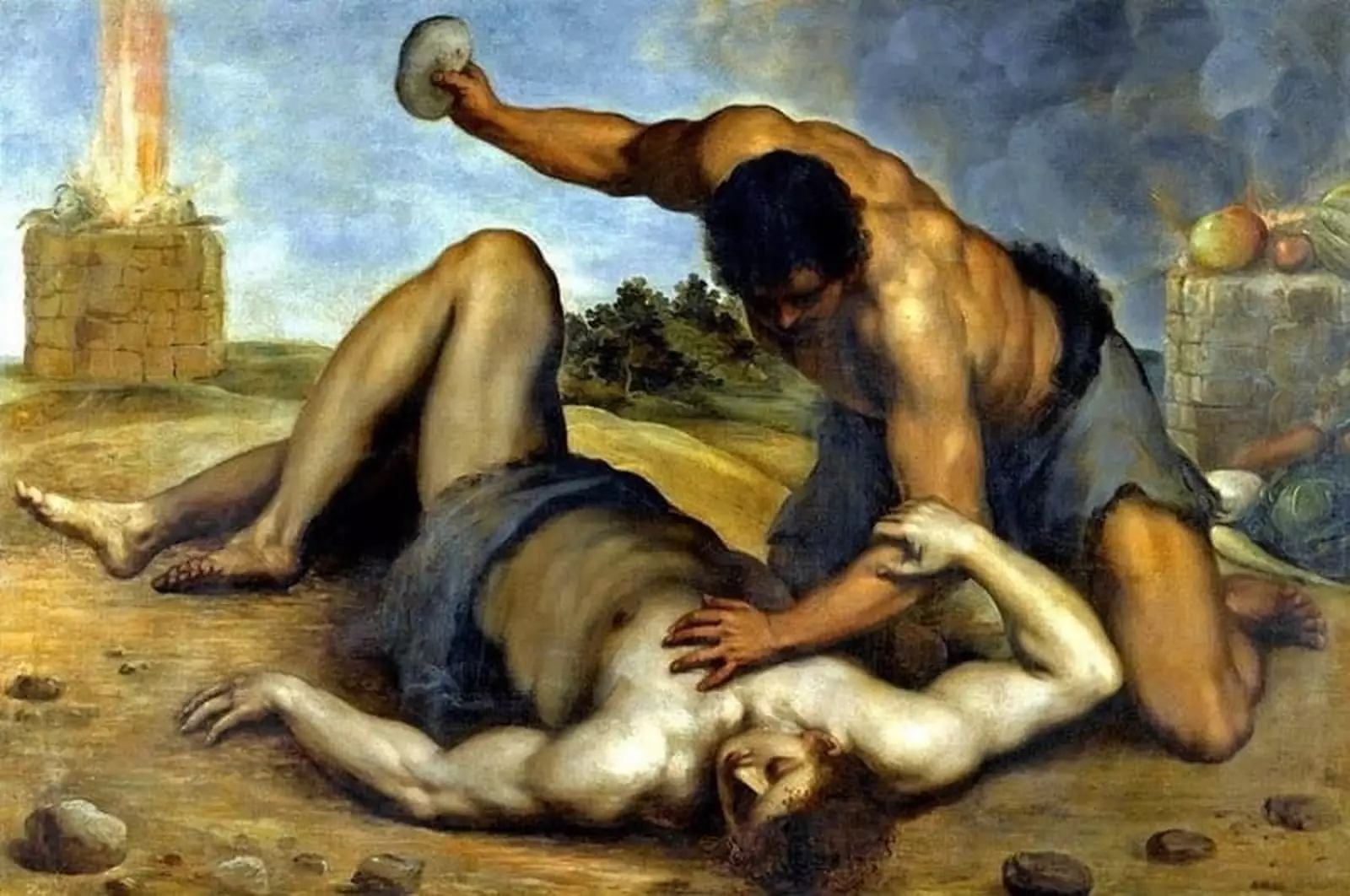
At the climax of the films, things get Old Testament. Sam smashes Max’s skull with a rock, evoking the most common depictions of Cain’s slaying of Abel. After Max dies, Sam stares at the palms of his hands and discovers that his “hands are stained with blood, [his] fingers with guilt.” (The actual shot composition evokes popular depictions of the stigmata.) And then there is the none-too-subtle invocation of the story of Lot and his daughter, the film’s repeated invocation of incest.
One of the more fundamental changes that Scorsese makes with his adaptation of Cape Fear is to center the narrative on the character of Dani (Juliette Lewis), the daughter of Sam and Leigh. Her narration bookends the film, Dani speaking directly to the camera. The film’s closing image is of Dani’s eyes. Dani is very much the focal point of the movie. Even more than Leigh, Dani is the character caught in a tug of war between Sam and Max.
Early in the film, Sam and Leigh remark upon their daughter Dani’s (Juliette Lewis) suspension from school after being caught with marijuana. Sam recalls that he and Leigh used to smoke it in their youth, providing a rather firm callback to the 1960s culture that produced the original Cape Fear. “In some cultures, it's considered almost a sacrament,” Sam tells his wife. “I realize in ours it's forbidden.” Leigh agrees, “Right up there with incest and necrophilia and bestiality...”
It is a provocative comparison for the movie to make so early, and it stands out in the context of the emotional affair that Sam is having with county clerk Lori Davis (Illeana Douglas), who is twenty years younger than him. Sam has seemingly had physical affairs before, uprooting his family to get away from his infidelity, and the film asks whether his non-physical relationship to Lori is any less of a betrayal of Leigh.
Like Dani and unlike Leigh, Lori is a brunette. Sam seems to treat her almost as a surrogate daughter figure. He gives her advice and shares gossip with her. “She looks up to me!” Sam tells Leigh when she confronts him about the relationship. Later in the movie, Sam is revealed to be uncomfortable with his daughter’s emerging sexuality. “Put some clothes on,” he chides her at one point. “You're not a little kid anymore.”
In an early conversation with Sam, Max confesses that he has a daughter of his own, but that he lost contact with her during his prison sentence. “My own daughter, she don't even know me,” Max explains. “After I went inside, her mama told her I was dead.” There is a sense in which his targeting of Dani, posing as a teacher, is an attempt to claim Dani as his own. Of course, it is also explicitly sexually charged and builds to Max’s attempt to sexually assault both Leigh and Dani as Sam watches.
This all gets at what makes Cape Fear such an interesting project as a remake. Reflecting Scorsese’s clear love of film and film history as an artform, while Cape Fear clearly works on its own terms as a narrative, it also feels like a work that is in direct conversation with the idea of remaking an older film. At a point in time when these sorts of remakes and reboots were significantly less common than they are today, Cape Fear seems to ask what the point is in remaking a pulpy thriller from 1962.
The film itself all but candidly acknowledges this. At one point, Sam inquires about Dani’s latest school assignment. “We're supposed to read Look Homeward, Angel, which is a kind of reminiscence,” Dani explains of the project, “and we have to attempt something in the same style.” In some ways, this is what Scorsese is doing with Cape Fear. He is looking at a film from the early 1960s and asking what it means to revisit that, both as a Scorsese film and as a 1990s film.
J. Lee Thompson’s Cape Fear was a film very heavily and very obviously indebted to Alfred Hitchcock’s Psycho from just two years early. It features a supporting performance from Martin Balsam and score from Bernard Herrmann. At one point, the original Cape Fear even puts Balsam on the same set where his character was murdered in Psycho, with that version of Cady (Robert Mitchum) seemingly boarding at Bates’ Motel.
Cleverly, Scorsese frames his remake through that lens. The opening credits of Scorsese’s remake of Cape Fear were co-designed by frequent Hitchcock collaborator Saul Bass. If the original was Thompson-doing-Hitchcock, then the remake is Scorsese-doing-De-Palma, quoting from Hitchcock’s most loyal fan, Robert DeNiro discoverer and fellow movie brat Brian De Palma. Throughout the film, Scorsese employs plenty of De Palma’s split diopters.
One of the more brilliant and insane reveals in Scorsese’s Cape Fear comes as Cady infiltrates the Bowden household in drag, posing as the family’s maid Graciela (Zully Montero). It’s obviously a very direct allusion to Psycho, but it is also a trick that De Palma has employed repeatedly in films like Dressed to Kill and Raising Cain. There is a sense in which Scorsese is inviting the audience to understand the remake as an update, its frame of references shifting forward in time.
More to the point, Scorsese’s Cape Fear makes an argument for the validity of its own existence by demonstrating that it can do things that the original could not. While the original Cape Fear existed in the context of Psycho, it was still a product of the early 1960s studio system. Although weakened by the release of films like Some Like it Hot, the Production would technically remain in effect until 1968, limiting what could be depicted and discussed on screen in the name of public morality.
As such, Thompson’s Cape Fear had to temper its violence and horror, leaving a lot of its brutality implied rather than explicitly depicted or articulated. In the original, Cady’s assault of Diane Taylor (Barrie Chase) takes place behind a closed door. In the remake, the audience is subjected to a graphic depiction of Cady’s attack on Lori. In the original, Sam’s (Gregory Peck) daughter Nancy (Lori Martin) is less a character than a cypher, afforded none of the agency or interiority afforded Danielle. As well-made as it is, it is a simpler, cleaner and safer film.
There is a sense in which Scorsese is taking advantage of a more liberal industry and more relaxed restrictions on what is acceptable in a mainstream studio film to really stir up the subtext within the original film, to bring it all to the surface. What is implied in the original can be excavated and explored in the remake, most obviously Sam’s impotence and frustration and the sexual threat that Cady poses to Leigh, to Dani and even to Sam. These ideas are out in the open now. That alone is enough to justify revisiting the source material. Not to reiterate what came before, but to push it.
Cape Fear is not just a nostalgic invocation of a 1960s pot-boiling thriller, but also an exploration of the limits of nostalgia. This is perhaps why Dani is the character who bookends the film. She opens by reading a personal essay titled “My Reminiscence”, beginning, “I always thought that for such a lovely river, the name was mystifying: ‘Cape Fear.’ When the only thing to fear on those enchanted summer nights was that the magic would end, and real life would come crashing in.”
Set in North Carolina, Cape Fear repeatedly suggests that Cady is the result of something primal stewing in the American South. Something repressed breaking out. The Confederate Flag is displayed prominently during a 4th of July Parade. Private detective Claude Kersek (Joe Don Baker) notices that Sam is afraid. “I want you to savor that fear,” he advises Sam. “The South evolved in fear; fear of the Indian, fear of the slave, fear of the damn Union. The South has a fine tradition of savoring fear.”
In some senses, this is what Scorsese’s Cape Fear is about. Throughout the film, there is this oppressive atmosphere of a storm on the horizon, waiting to break. The opening credits are set against the surface of a river, warped reflections and distorted visages bouncing off the ripples, a reminder that things stir in the depths. Cady is ultimately drowned in the river, as if he and everything he represents is being dragged back into the depths of the collective subconscious.
This is the magic of Cape Fear. It is not only a satisfying thriller in its own right and a worthy addition to the Scorsese canon, it is also the rare cinematic remake that honestly and earnest engages with what it means to remake a classic film in a different time and context, using that framework as an excuse to really delve into what was bubbling away just beneath surface of the original work. Cape Fear has hidden depths.